
The Final Polish
How to boost your confidence by spending a little extra time with your manuscript.

Hello friends, it’s Hadley here. I just wrapped up the final round of developmental edits for my second novel, Not a Perfect Science, and I’ve been thinking a lot about how to know when a book is finished. Letting go of a project you’ve been working on for months or years (in my case, six years!) can spark a new wave of imposter syndrome. Is your manuscript really ready? Will people like it? Will you get swamped with negative reader reviews or rejections? Too much time thinking about all the scary possibilities, and you might decide to spend another few months rearranging commas.
Unfortunately, no matter how long you toil over a manuscript, it will never be perfect, and the hard truth is that not all readers will love your book—some might even hate it. Which is why it’s imperative to make sure you, the author, love the work before anyone else does.
For my second book, I wanted to cultivate a level of confidence I didn’t feel the first time around. But as someone who’s struggled with a harsh inner critic my entire life (believe me, the meanest Goodreads reviewer pales in comparison to the fault-finder extraordinaire inside my head), I wasn’t sure that kind of confidence was possible.
Turns out… it is! After taking my time with what I now call “the final polish,” I feel genuinely excited to send this book into the world. So how did I get there?
First, I did the work. I listened to the wise suggestions of my editors and didn’t shy away from making changes. I took a six-week craft class on sentence structure. I sent my manuscript to a subject-matter expert. I read the whole thing out loud, slowly, and considered each scene and paragraph and sentence. If I couldn’t point to a tangible way each passage contributed to either plot, character development, or theme (and hopefully more than one), it didn’t make the cut. This final draft is 20,000 words shorter than the version I sent my agent last summer.
I also reread the final section of Matt Bell’s fabulous craft book, Refuse to Be Done, in which he describes his many methods for elevating a final draft. Exercises like removing weak dialogue-adjacent actions (shrugs and nods and head shakes, oh my!), substituting more specific nouns, and using search & find to remove overused “weasel words” helped tighten up my prose.
Beyond doing the work of polishing my manuscript, however, the biggest confidence booster turned out to involve a fresh-printed draft and a highlighter. A while back, my author friend and mentor Camille Pagán mentioned that during her final read-through, she makes sure every page contains at least one thing that delights her. When she first said this, I was taken aback, doubtful any of my prose qualified as “delightful.”
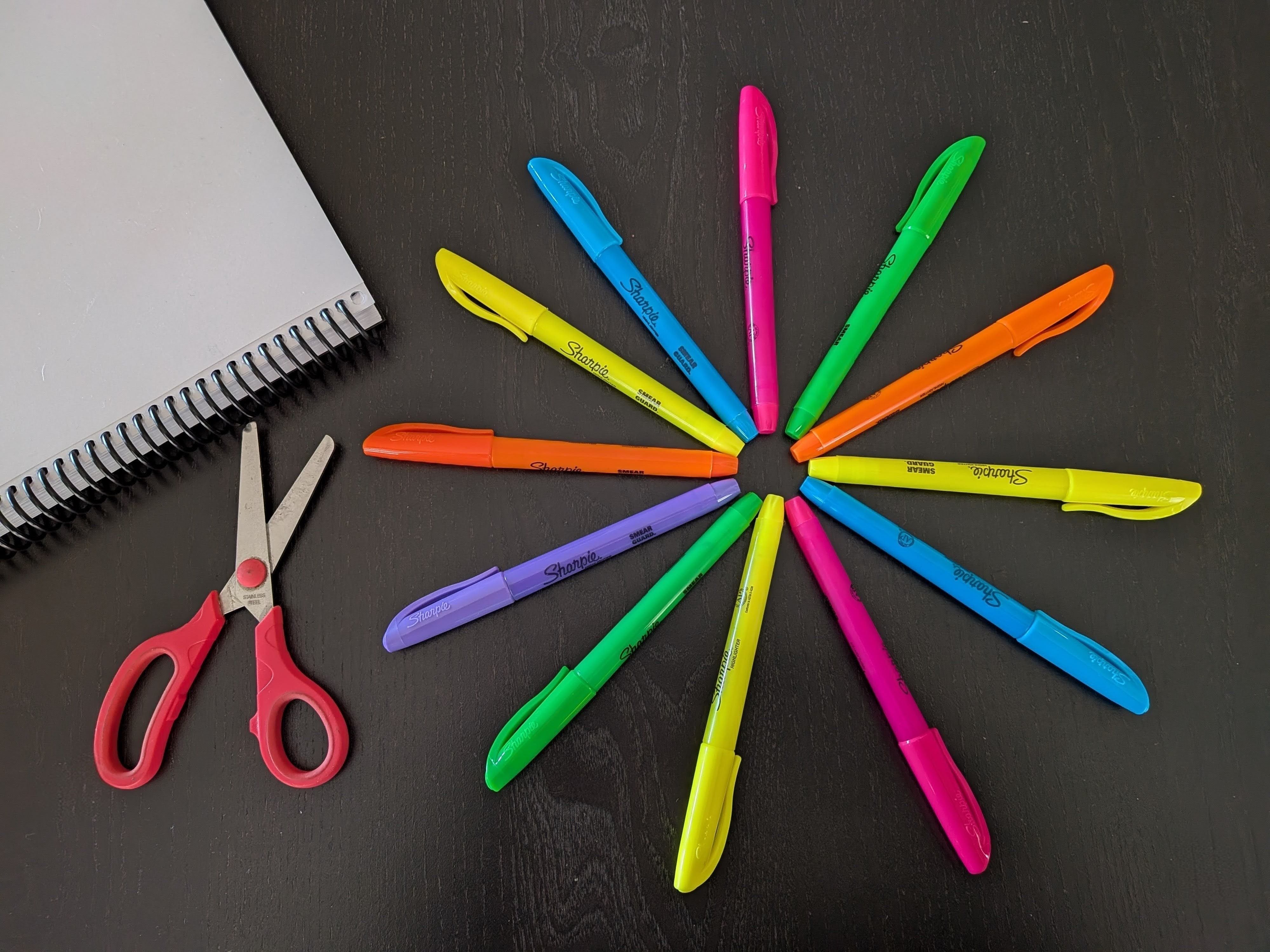
But right before I turned in my edits, I read the manuscript out loud one more time, highlighting in yellow every time I came across a word choice I particularly liked or a phrase that made me smile or a plot point I felt proud of. Friends, those 350 pages now contain a whole lot of yellow, and I had a bit of an epiphany: my lack of confidence is less a reflection of the quality of my writing, and more a consequence of my behavior. Until now, I never let myself appreciate the good parts.
As writers, we are taught to focus on what needs fixing. We highlight weak verbs and clichéd phrases; we agonize over clunky dialogue and bland description. We kill our darlings. But how often do we step back and appreciate the beating heart of the story that made us write it in the first place? The parts that make us laugh or gasp or cry?
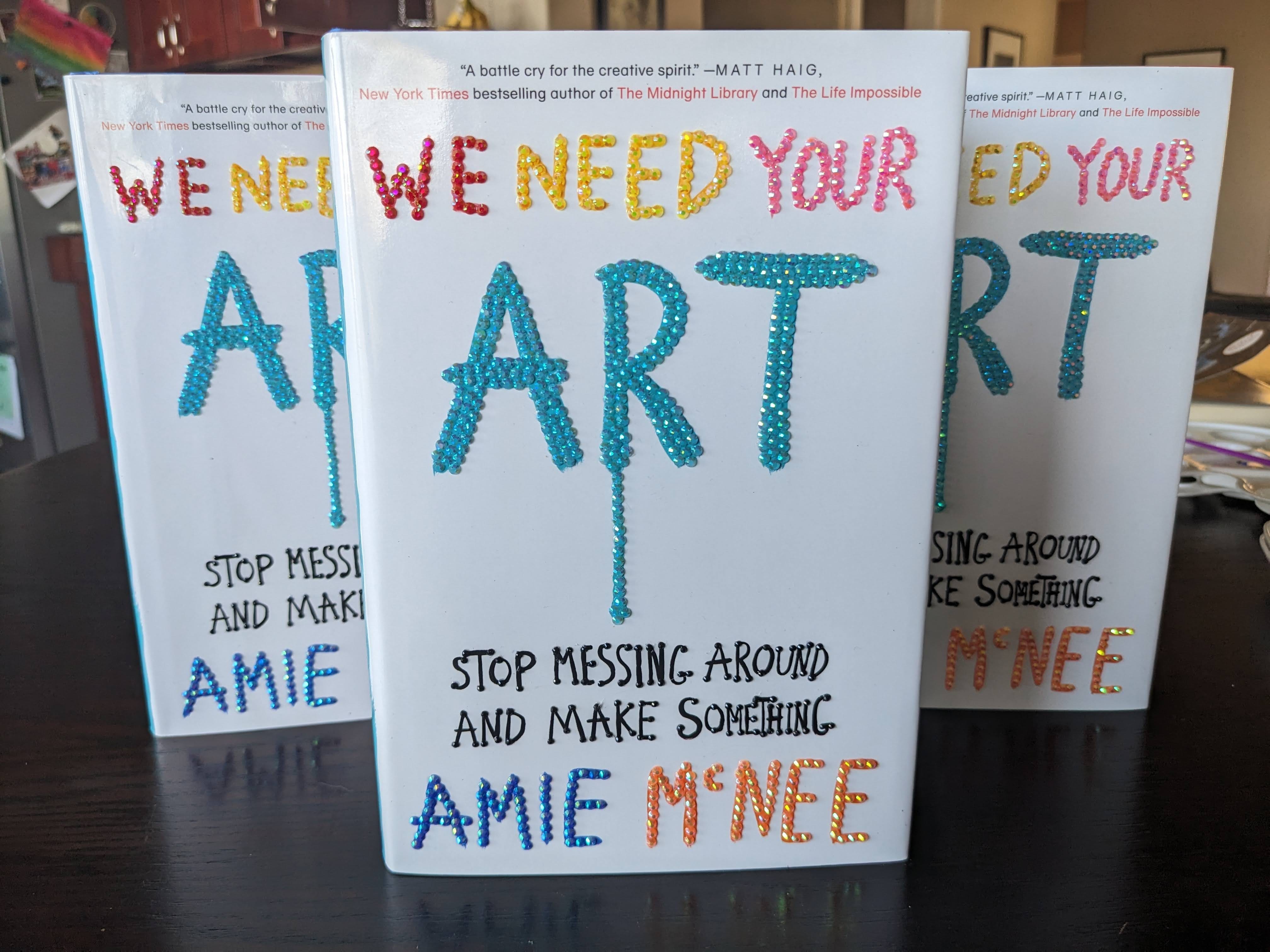
So, dear writer who isn’t sure your work is done, I recommend that at least once before you declare your manuscript finished, you get out your highlighter and read your story aloud, basking in all the great work you’ve done. And then—send out that book with confidence! Your writing is a gift to the world, and if you keep polishing forever, the world never gets to experience that gift. (If you need more convincing that sharing your creative work is a gift, I recommend reading We Need Your Art by Amie McNee. I loved this book so much, I bedazzled three copies and gave them to Amy, Erin, and Lauren on our recent retreat).
Let’s take it to the chat: How do you decide when a manuscript is finished? Do you take time to relish the good parts of your own writing?
Amy: When you think you are finished with your manuscript, ask yourself: Is there anything you still feel self-conscious about? Be honest. If you think, Did I rush that one chapter?, you probably did. If you think, I know that character isn’t fully developed but I’m sick of working on it, you’re not done. If you are self-conscious about anything, you’re not finished. (You probably just need a break, TBH. Or another set of eyes). I know that sounds daunting but those insecurities are not measures of worth—they are data. Follow those feelings as you revise. They are your roadmap.
But publishing is a very long road, and once we’ve done that work, it’s so important to allow ourselves to delight in our own accomplishments, even when that does not come naturally. It can be practiced, and learned!
Lauren: To decide if my manuscript is done, I usually pinpoint whether there’s anything else I can do to make it better. Like Amy says above, that could be something that’s niggling you each time you read through, or it could be a matter of finessing each line. Only once I’ve exhausted every opportunity for improvement, then I know it’s time to share with someone else. Another reader will always tell you what you’re missing—and then the process begins anew. To be honest, I don’t think a book is ever “done.” I’m sure if I read through either of my published titles today, I’d find all sorts of new things to fix. But at some point, you have to accept that your manuscript is a living document, and like all living things, it exists in a state of evolution, not perfection.
I’ve never taken the time to really soak in the parts of my books I’m most excited about, but I love the concept, especially before publication when you’re feeling extra vulnerable.
Erin: I agree with Lauren that a book is never done, but I’m also very deadline driven, so a draft is “done” for me when I hit the goal I am working toward at the moment: messy first draft, ready for beta readers, copyedits, final polish, etc. It always helps me to have a deadline to shoot for when I’m working on any stage of a book—even if it doesn’t pan out. I’m nearing the end of my WIP, which I thought would be ready last fall. That’s honestly laughable now, but it was a good goal to shoot for. And now that I’m pleased with where this book is at, an entire year after finishing the messy first draft, I’ve been thinking about making sure I laugh every chapter while reading it.
But when Hadley told me about finding something that delights you on every page of your manuscript, I thought that was brilliant. On my next read, I’m going to follow Hadley’s lead and highlight all the things that I love on the page. And if a page goes by without some yellow ink, I’m going to take the time to add something that makes me smile or giggle or cry. With Hate Follow I was so focused on the mechanics of the book and making sure I did everything “right.” But this time around I’m really trying to focus on writing a book that delights me—which is a lot more fun!
Now we’d love to hear your ideas—what are your top tips for polishing a manuscript? How do you know when you’re done?
You know I love this!! :)
I love this idea so much! I’m nearing the end of working on my manuscript before I query, and now I want to do a pass to highlight something I love on each page before I submit. What was the craft class on sentence structure you took?