
Starting Anew
New projects don’t have to be good, they just have to exist.

Hi WGC, it’s Amy here. I’ve shared that my debut, The Days I Loved You Most, was a ten-year journey to publication. So you can imagine how it feels post-pub to be diving into a new project after all that time. I liken it to moving to a new town and enrolling in a new school. I don’t know anybody here, and I kind of just want to go back and hang out with my friends.
However, the show must go on. We must start anew, whether we’ve wrapped a project, shelved a project, took a long pause, or are starting out for the very first time. So, how do we do that?

…Anybody? Just kidding. Kind of. I am very much still figuring it out. This new project has very different challenges than my first. I started with theme and how I want the reader to feel, what I want them to explore and experience, and found my premise that way. But I am struggling to get into my characters. Maybe because it’s easy to compare how well I knew my old characters after all our time together (literally a third of my entire life) versus how little I feel I know my new ones. Because for me at least, the writing is part of the character exploration and it is still early days.
One thing that’s been helping me lately is figuring out what my characters are into (what are their hobbies, their jobs, how do they spend their free time) and then deep diving into the world of people who do those things by reading non-fiction books about those jobs/hobbies to inform who my characters are. I find it to be an interesting way to zoom out on their lives by first getting really granular. It also makes adding more specific details later that much easier.
IT DOESN’T HAVE TO BE GOOD, IT JUST HAS TO EXIST.
These words have been my mantra. I say them loudly to myself as I close my eyes to try to block out any other mental noise and type my shitty first draft. Historically, I have not been a “write every day” kind of writer. I have two young kids and a baby, it is not my season to write every day and I also like (and constantly champion within our group) taking breaks. I think it’s important to step away, to pour back into our lives and our creative cups.
But with this book, I’ve attempted to write every day in order to complete this next draft. I wrote the first draft of this book for NaNoWriMo in 2021, worked on it briefly in 2024, before picking it back up again last fall. These breaks have made it harder to sink back in and remember where I left off.
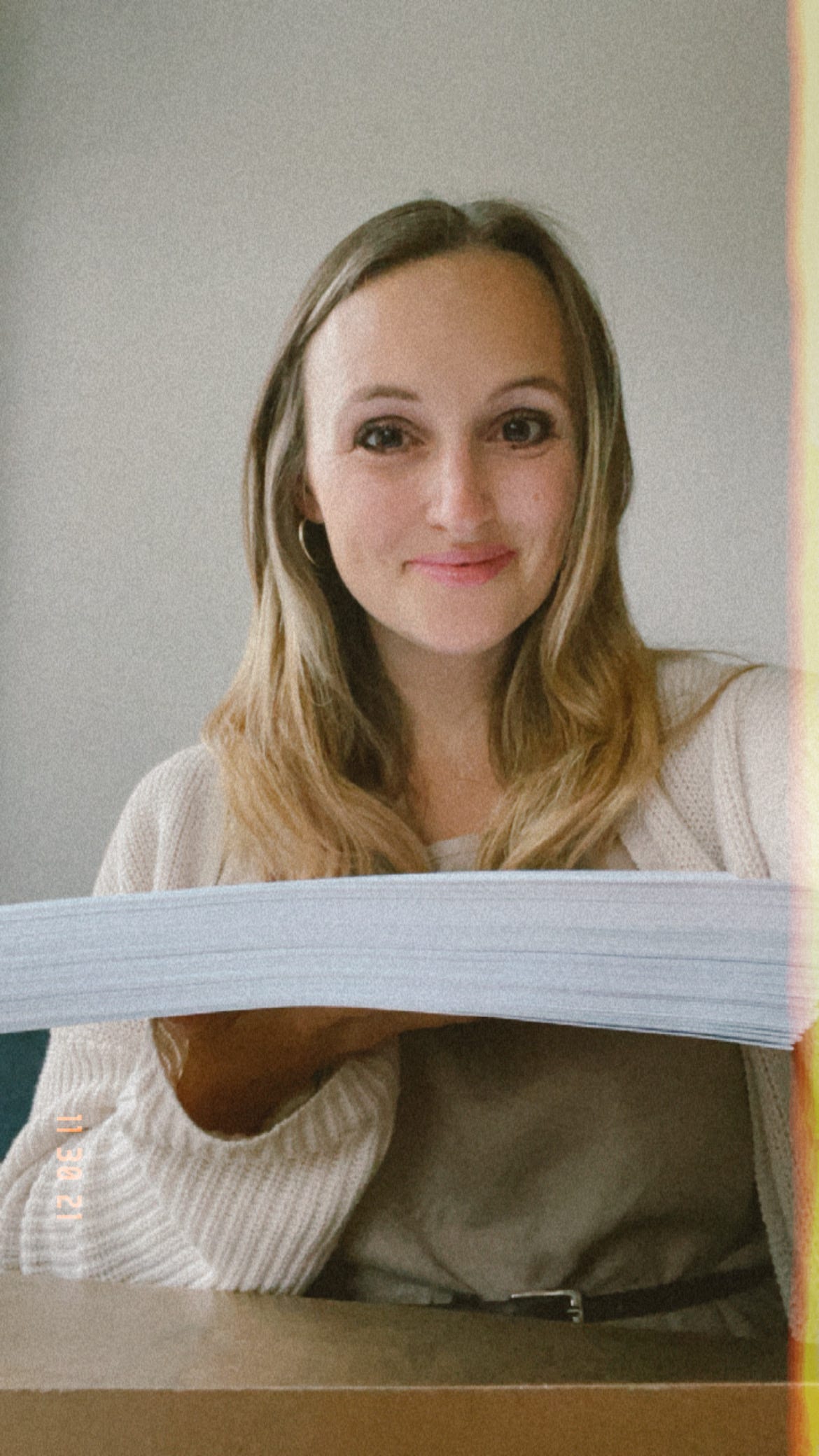
So I have been pushing myself to touch the project regularly since the New Year. I wrote every day for a while, until my son’s 5th birthday when, simply, it was such a wonderful day that I forgot. I texted the group chat in horror the next morning. After nearly three months of consistency, I’d broken the streak. Since then, I’ve been less strict about hitting my five-minutes-a-day minimum but kept chipping away. My goal was to finish a complete draft from January - April, and as of last week I hit that goal!
Do I know my characters? Getting there. Do I have a draft that maybe isn’t good but exists, one I can work from going forward? You bet. And that feels like something to celebrate.
So I bring it to the chat. To one extent or another, all four of us are all in the throes of new writing, and How do we even write books again? is a regular refrain in the group chat.
WGC, how do you approach a new project? What helps you as you navigate a whole new world and the feelings and expectations around that?
Erin: I very clearly remember having a mini breakdown about this very subject last February. I was about two months into a new manuscript, and I was so frustrated about everything Amy mentions: I didn’t know the characters or their motivations well enough; I had so many things I needed to research; and, of course, my writing sucked. Well, I can tell you the answer is time! If you keep putting in the work, it will all come together (and yes, you may have mini breakdowns along the way). Now, a year and a few months later, that manuscript is newly done—meaning I’m on draft six, it’s been through multiple beta readers and an editor—and I love it just as much if not more than my first book.
I actually just started book three (I’ve written 2,000 words!), and the same feelings are cropping up, even though I have a solid one-sheet on the idea and feel good about the characters and basic plot. The difference is now I realize that these feelings are totally standard at the beginning of a project. And now I can’t wait to see where I’m at in a year! I’m going to keep plugging away while reminding myself that I will get where I want to be eventually.
Hadley: I like to draft quickly in the beginning, taking advantage of the excitement of a new idea before my inner critic kicks in. One of the most challenging parts of my current project has been figuring out how to keep the momentum going through the inevitable interruptions of life. Last fall, when I went on submission for Not a Perfect Science, I was determined to distract myself by starting a new novel. Somehow, a fully formed idea plopped into my head in October, and I dashed off a rough outline and managed to write about 35,000 words before getting distracted by editor calls and contract negotiations, and eventually, edits for book two.
After spending several months away from my new project, I’m finding it tough to recapture that momentum from last fall. I’m also in the middle of copy edits, and switching gears from editing super polished words to facing the chaos of my “zero” draft feels a bit like dumping a bucket of ice water on my head.
As much as I can, I’ve been trying to sink into the vibes of my new novel—the characters, the world, the basic plot—and not worry too much about the details. On days when writing new words feels too daunting, I’ve spent time journaling about my “why” for this story, making a playlist of songs that captures the mood I’m trying to create, and working through the exercises on backstory in Story Genius by Lisa Cron. More than anything, it helps to remind myself that I’ve done this before! I remember exactly how lost I felt in the middle of drafting novels #1 and #2, but in each case, I kept going and the way forward became clear. No matter how messy this draft feels, how disjointed the plot and unformed the characters, I trust it’s all part of the process.
Lauren: I agree with Hadley—it really comes down to trusting the process. And to add to that, it’s also important to learn to sit with discomfort. The discomfort of not knowing what you’re doing. The discomfort of an uncertain outcome. The discomfort of “wasted” time. And, yeah, the discomfort of mediocre writing. Once you accept the discomfort, you can stop resisting the process and lean into your intuition. My intuition never has all the answers at the beginning—annoying!—but if I give it space to breathe and don’t let my inner monologue smother it with self-doubt, eventually, that other more meaningful inner voice tells me what I need to do and where I need to go. It always takes longer than I want it to, but somewhere in that span of time, my new project becomes a familiar friend.
Chat with us in the comments! How do you begin? Please share your wisdom, your struggles, your tips and tricks for jumping into a new creative project. We would love to hear from you.
I feel all these vibes!! A writer needs incredible self motivation to keep going, I try to accept the bad days are as part of the process as good days! My problem is I'm impatient - why does it take so long to write a fully-formed book??!
I'm in the getting to know you phase and figuring out why the characters are in the book and what's the lesson they need to learn. My goal is to spend time with the project each morning, first thing, and put in the time to make the thing exist.